Our Hotels
Keahotels is one of the largest hotel chains in Iceland operating ten hotels. Together the hotels provide over 800 rooms and service travelers, local and foreign, all year round.
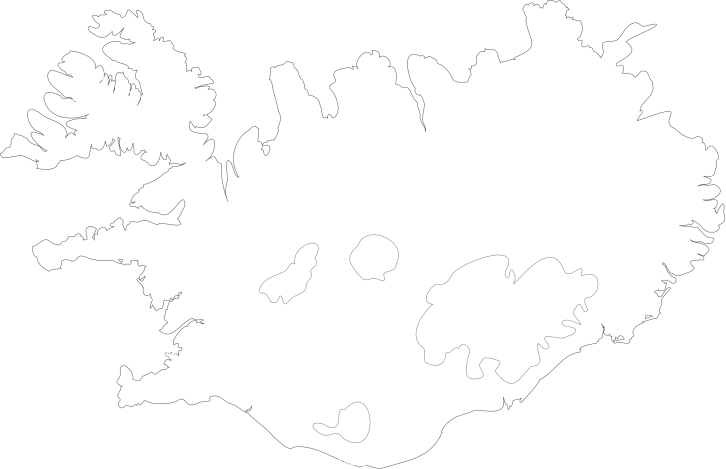
Reykjavík — Capital
Vík — South Iceland
Akureyri — North Iceland
Siglufjörður — North Iceland
Grímsnes — South Iceland
Reynisfjara Before and After: Is Iceland’s Black Sand Beach Really Gone?
I’ve been to Reynisfjara many times before. I was born in Iceland, have lived here my whole life, and spent years travelling around the country with a camera in my hand.
I’ve seen Reynisfjara in bright sunshine, the kind of rare, warm day that almost makes you want to lie down on a beach blanket and reach for the sunscreen. And I’ve seen it in sideways rain and heavy wind, when the Atlantic feels angry, and the sneaker waves it’s known for crash unpredictably onto the shore.
I’ve stood there when the ocean was calm and inviting. And I’ve stood there when I wouldn’t dare turn my back on the sea.
So, when I started seeing posts claiming that “Reynisfjara is gone,” I was surprised how quickly change was mistaken for destruction. Change does not mean something has disappeared; it simply means nature has been at work.

Is Reynisfjara Gone?
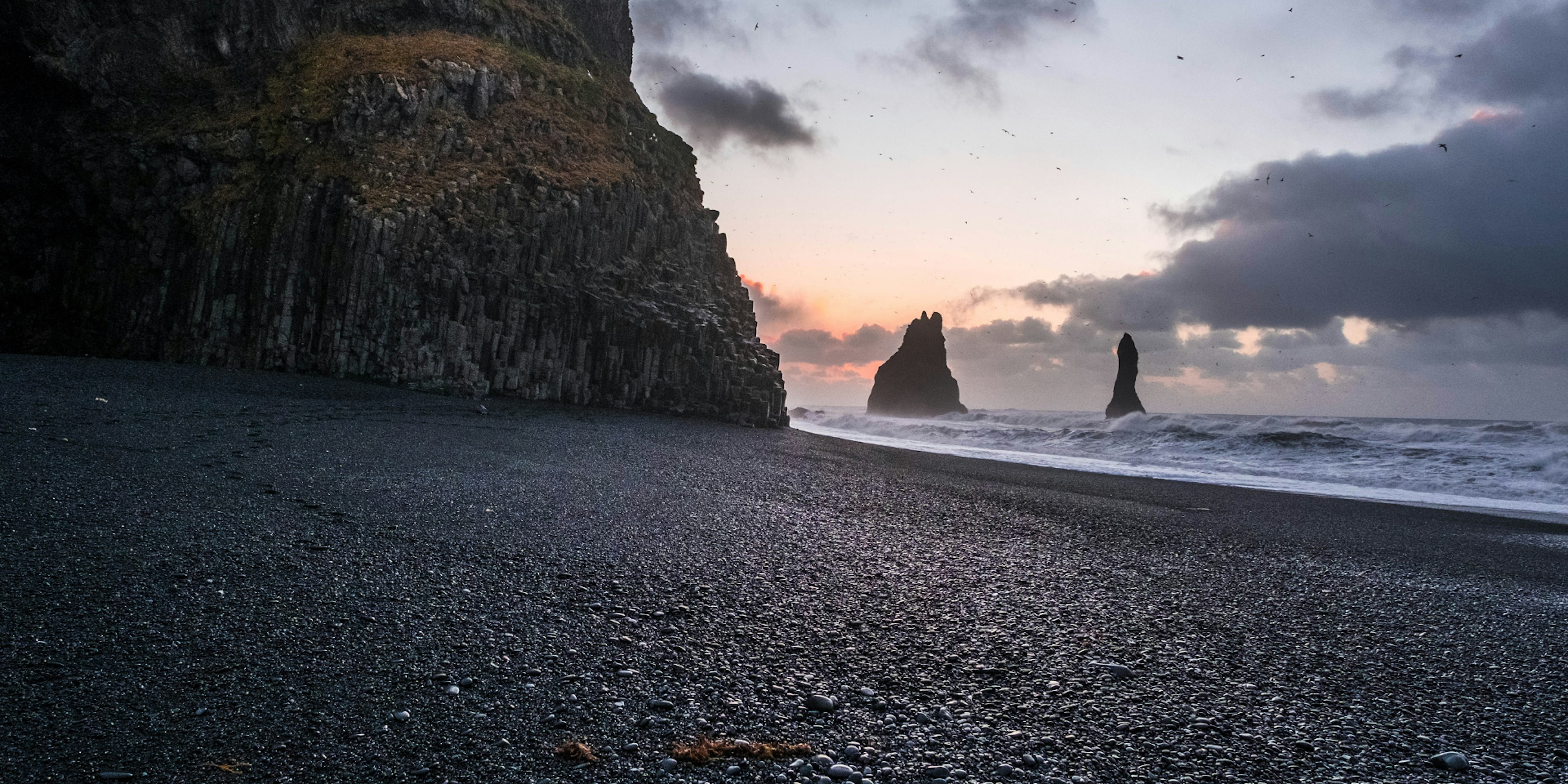
No, Reynisfjara is not gone.
The basalt columns still rise sharply from the cliffs. The Reynisdrangar sea stacks still stand offshore like they always have. The beach is still black, still dramatic, still unmistakably Icelandic. But it does look different.
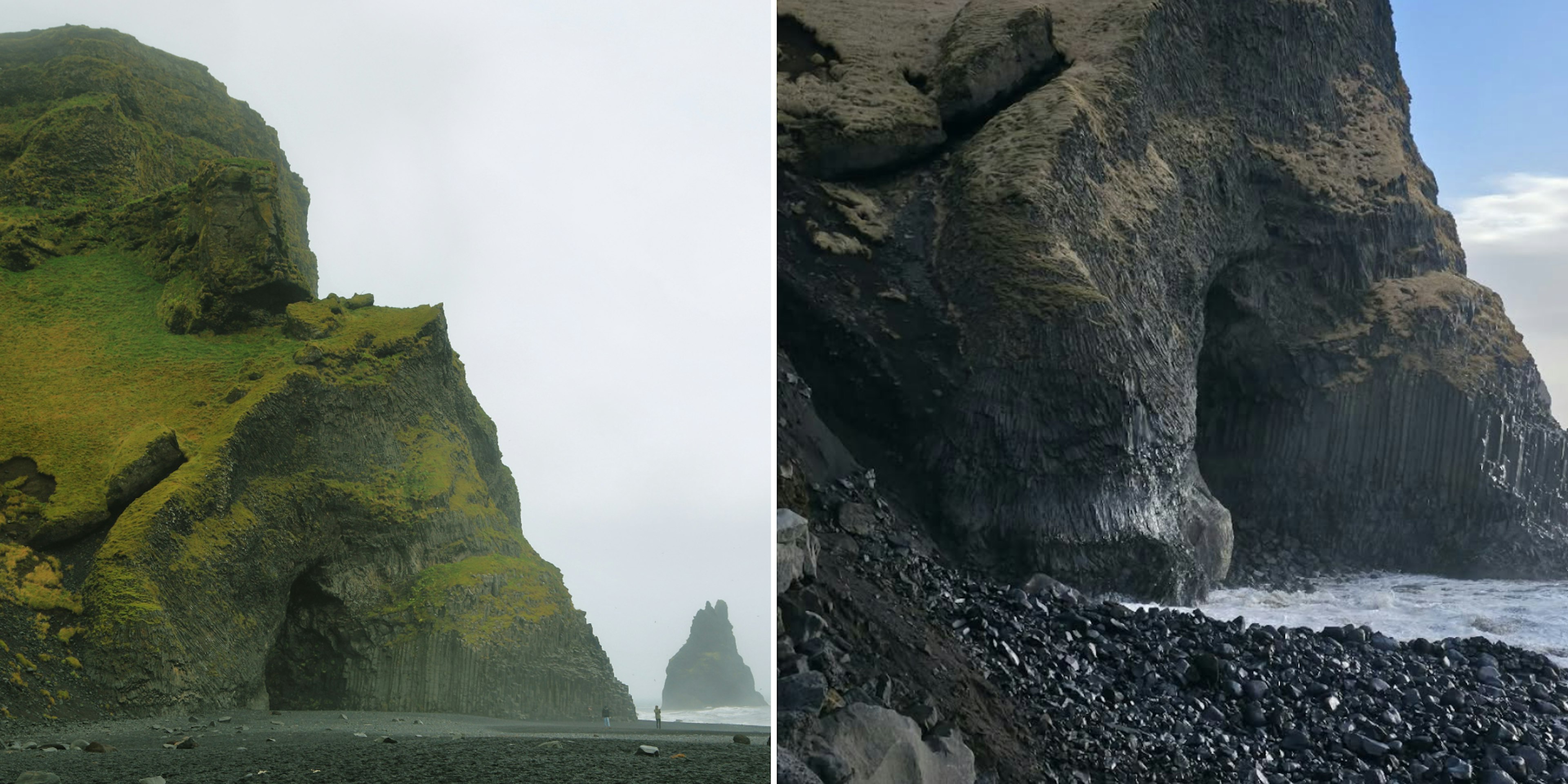
After a winter of strong easterly winds and heavy Atlantic swells, much of the fine black sand has been pulled out to sea in certain areas. Stones that were once hidden are now exposed. The shoreline feels closer, narrower, more rugged.
That’s what people are reacting to.
How Has The Black Beach Changed?
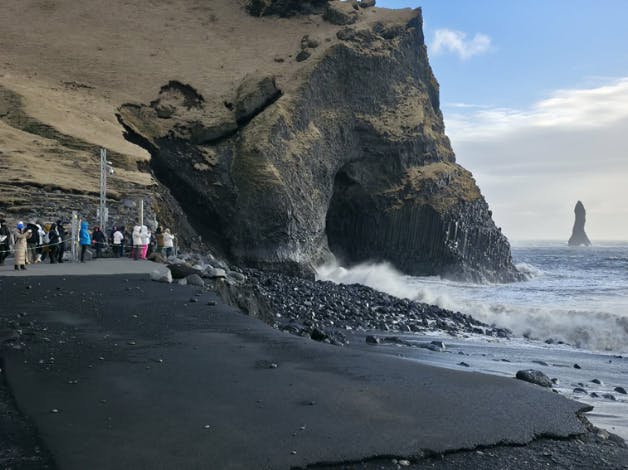
Before, the beach stretched wide and smooth, thick layers of soft volcanic sand leading toward the ocean. It had that perfect, uninterrupted black foreground that photographers love.
Now it doesn’t extend as far in some places. More stones have surfaced, and parts of the beach feel rougher and tighter. It’s harder to walk comfortably along the shore, especially near the water. The cave that used to be an easy stop along the beach is no longer accessible; for now, the ocean has reclaimed that space.
And honestly, that’s not necessarily a bad thing.
Reynisfjara is considered the most dangerous beach in Iceland. Over the years, there have been many attempts to restrict access and improve safety because people underestimate the power of the sneaker waves. If the changing shoreline makes visitors pause, slow down, or keep a little more distance from the sea, that might not be the worst outcome.
When I visited recently, even I stopped for a moment. I’ve stood in the same spots countless times, but this time it felt different. The landscape looked exposed like the ocean had quietly rearranged everything overnight.
Witnessing that kind of transformation is not something you get to see every day.
Before image on the left and after on the right.

Why Does Black Sand Beach Looks Different?
Lava once met the cold ocean here, cooled quickly, and over time broke down into the fine black sand that made the beach famous. But beaches are not permanent fixtures; they are constantly shifting systems shaped by wind, waves, and storms.
During powerful winter storms, waves pull sand offshore. At the same time, the sea can carry in stones to the shore and expose underlying stones making the beach more rocky. When the finer sand is stripped away, and new material is moved in, the entire surface of the beach can change in a surprisingly short time.
Sometimes the sand returns. Sometimes it takes months or even seasons. And sometimes the coastline adjusts gradually, little by little.
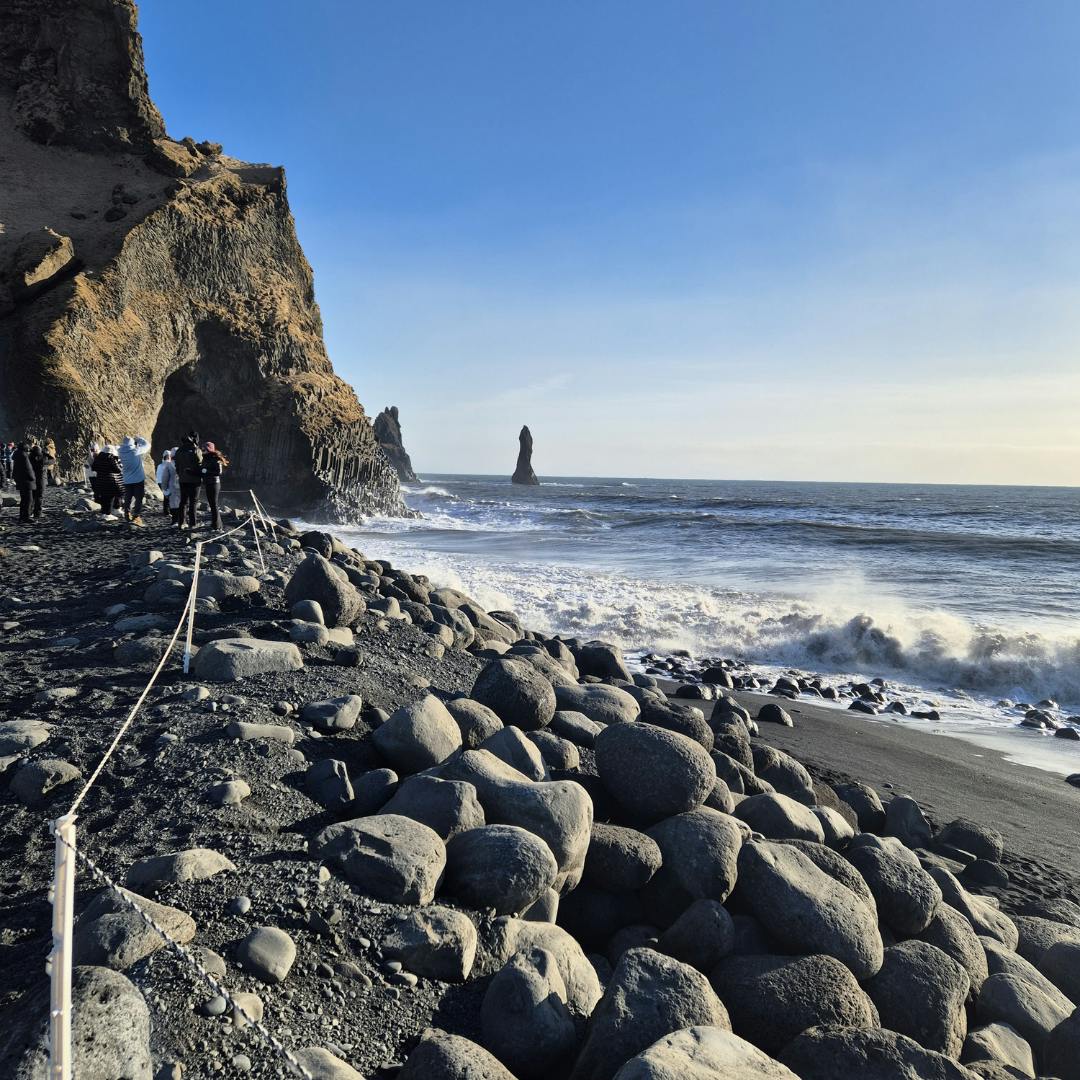
We’ve seen this kind of transformation before.
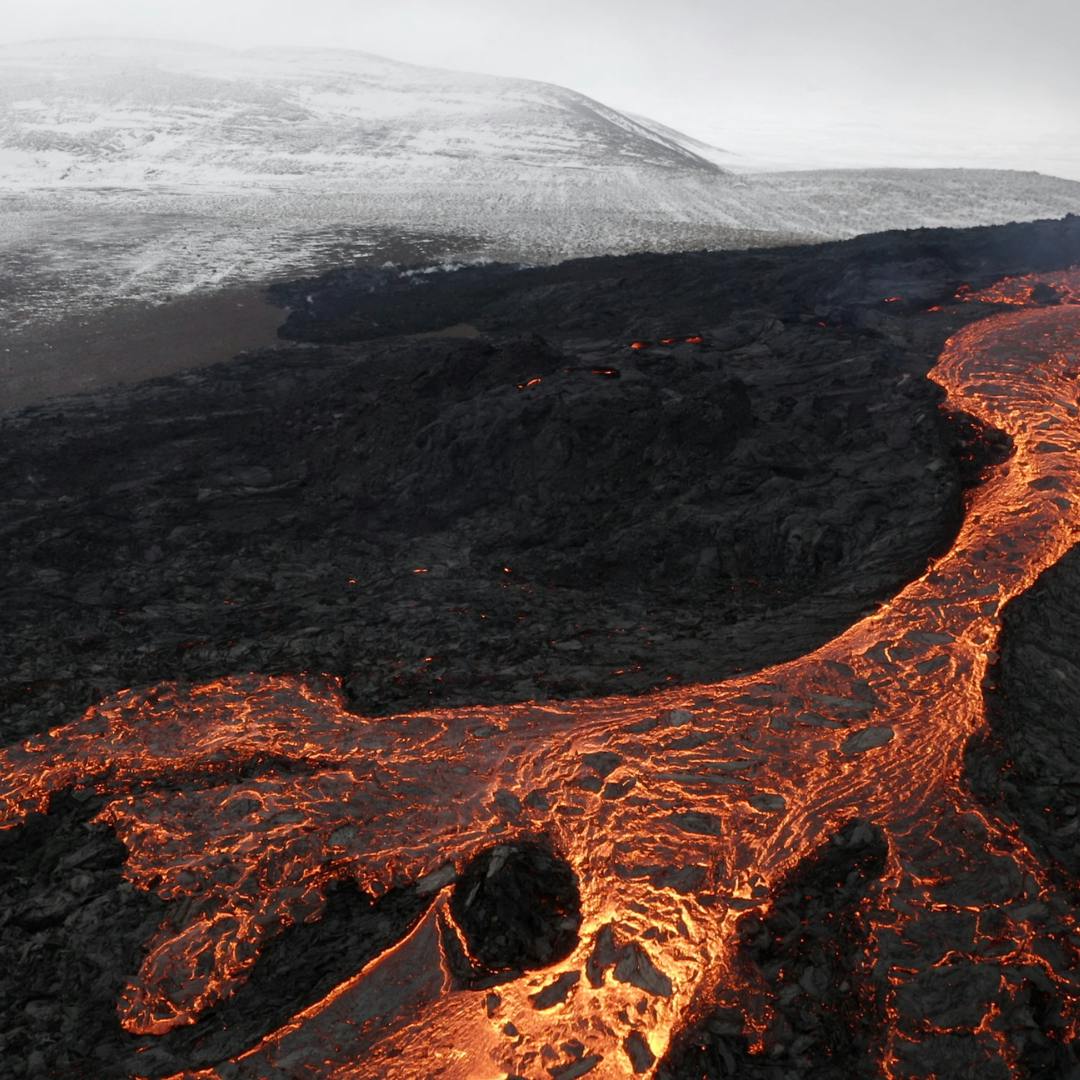
On the Reykjanes Peninsula, we’ve seen how quickly things can change, not in centuries, but in days. During the recent volcanic activity, Grindavík was evacuated, and lava flows cut across one of the roads leading into town, altering the surrounding area.
Fire changes one part of Iceland.
Now the ocean is changing another.
If you live here, you grow up knowing the landscape isn’t fixed. It’s always in motion. Reynisfjara before and after isn’t about something being destroyed. It’s about Iceland doing what Iceland does.
Should You Still Visit Reynisfjara?
Yes, without hesitation.
If you’re considering skipping Reynisfjara because you heard it is “gone,” you’d actually be missing out on something special.
You’d be seeing the beach in a rare moment, shaped by one hard winter, carved by storms, revealing layers most people never notice.
We would like to thank Jónas Erlendsson for sharing his recent images of Reynisfjara, which clearly document the changes along the beach.